Independent fly-rod education for anglers at every level.How we evaluate gear
Learning center

Fly Rod Weight Guide

Understand fly rod line weights and how to match them to fish, flies, wind and water.

Evidence & interpretation: Recommendations on this page are FlyRod.com editorial synthesis unless a specific manufacturer or product fact is identified. Treat ranges as starting points and verify current product specifications with the manufacturer. See our methodology and selection framework.

Start with the job

Understand fly rod line weights and how to match them to fish, flies, wind and water. Begin with the water, fish, fly size and conditions rather than a brand name or price point.

The practical principle

Fly rods work as systems. Rod, line, leader, fly and caster all influence the result. A strong decision considers the whole setup rather than treating one specification as the answer.

What matters most

  • Frequency and type of use
  • Typical casting distance and wind
  • Fly size and weight
  • Need for delicacy versus power
  • Your preferred casting tempo

What matters less than people think

Small differences in marketing language and price can matter less than fit, balance and practice. A well-matched mid-priced outfit can be more useful than an expensive rod selected for the wrong application.

Simple decision rule

Choose the least specialized rod that comfortably handles your most common fishing. Add specialty rods only when a repeated limitation becomes clear.
Practical interpretation

Rod weight is primarily a line-system and payload decision. Small flies and delicate presentations often fit lighter line classes; wind-resistant flies, sinking systems and larger fish can justify heavier tackle.

Start with fly size and fishing conditions, then confirm that the chosen weight provides enough fish control. Species alone is too blunt a selector.

How to use this when choosing a rod

Translate the concept into a specific fishing consequence. Ask what changes for casting, presentation, line control, transport, durability or service. If a specification does not alter any of those things for your real use case, it probably should not dominate the purchase decision.

Where product-specific numbers or policies are involved, use this page for the decision framework and verify the current fact with the manufacturer. That separates durable education from details that can change over time.

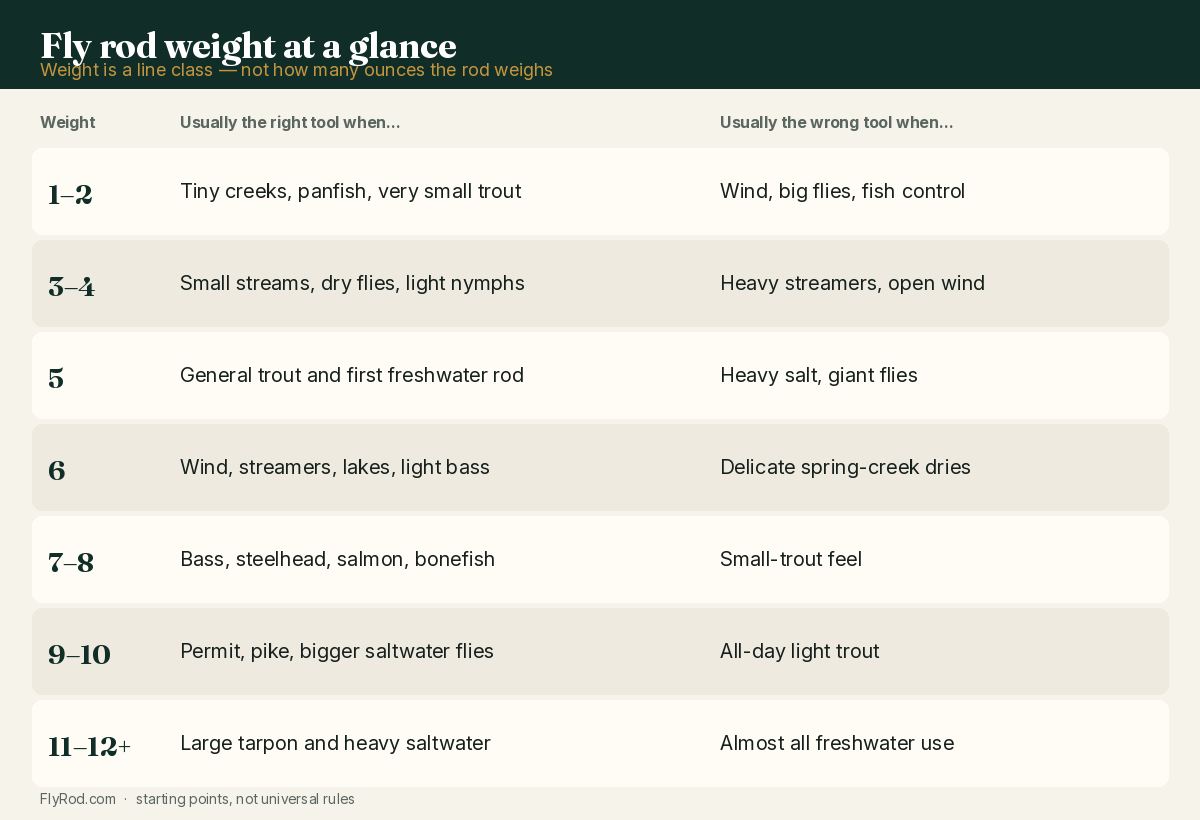
The chart people actually need

Ignore marketing numbers on the blank until you can point to a row below and say “that is my fishing.” Weight is the line the rod is built around. A heavier line carries a bigger fly and punches wind. A lighter line lands quieter and feels livelier on small fish.

Chart of fly rod weights from 1-weight through 12-weight with typical uses and limits
Use the right-hand column. Knowing when a weight is wrong is as useful as knowing when it is right.

If you fish two very different jobs — say spring creeks and windy bass lakes — one rod will always be a compromise. That is fine for a first purchase. It is a poor reason to pretend a 5-weight is a saltwater rod.

Frequently asked questions

Does fly rod weight mean how heavy the rod is?

No. Weight is a line-system rating. A 5-weight rod is built around a 5-weight fly line, not a number on a scale.

What weight fly rod should I buy first?

A 5-weight covers the widest band of general freshwater trout fishing. Go lighter for tiny water and small flies; go heavier for wind, big flies or stronger fish.

Can I put a 6-weight line on a 5-weight rod?

Some anglers overline by one size for closer work. Do it on purpose after you know how the rod loads—not as a default first setup.