Starting point
A 10- to 10½-foot 3-weight is the practical middle ground for many anglers. It offers reach without becoming as specialized as the longest competition-style rods. Move lighter for fine tippet and smaller fish; move heavier when larger fish, heavier rigs or conventional overhead-line use are regular parts of the job.
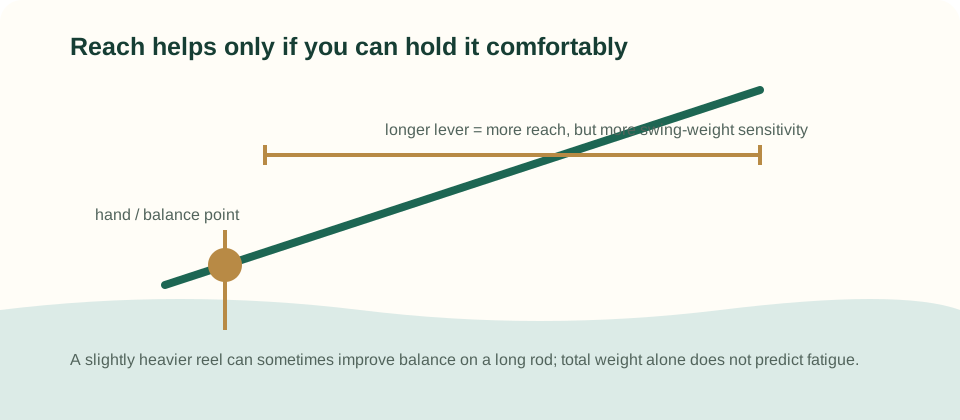
Why 10 feet is different from 9 feet
Extra length helps keep line and leader off the water, extend the drift and maintain contact. At 10½ or 11 feet, those benefits increase, but so do swing-weight and transport costs. Long rods make sense when you actually use the reach—not simply because dedicated Euro rods tend to be long.
2-, 3- and 4-weight choices
| Rod | Best fit | Trade-off |
|---|---|---|
| 2-weight | Fine tippet, small flies, smaller trout | Less reserve for heavier rigs or stronger fish |
| 3-weight | Most versatile dedicated starting point | Still specialized versus a normal 9-ft trout rod |
| 4-weight | Larger fish, heavier rigs, broader crossover use | Can be less protective/pleasant for very light systems |
Balance is not a cosmetic detail
The rod spends much of the day extended in front of you. A very light but tip-heavy outfit can be more tiring than a slightly heavier setup that balances closer to the hand. Reel mass can therefore be useful on a long nymphing rod. Judge the assembled outfit, not rod weight alone.
Decide whether this is a specialist rod
If you also throw dry flies with a conventional weight-forward line, check guide sizing and the manufacturer's intended overhead-line range. Some dedicated Euro rods are optimized around thin leaders and mono/level lines; others are designed to cross over more easily.
Common mistakes
- Buying the longest rod available without considering fatigue.
- Choosing solely by fish size and ignoring tippet protection.
- Using the lightest possible reel even when the outfit becomes tip-heavy.
- Assuming every 3-weight is designed for the same line system.
Length and weight decision matrix
| Setup | Best fit | Main trade-off |
|---|---|---|
| 10 ft 3 wt | Most anglers wanting a practical Euro-nymphing starting point | Less reach than specialist 10½–11 ft rods |
| 10½–11 ft 2–3 wt | Dedicated contact nymphing, longer leaders, broad rivers | More swing weight and specialization |
| 10 ft 4 wt | Heavier rigs, stronger fish, mixed nymphing use | Less delicate tippet protection than a light specialist rod |
What changes the answer?
- If you fish conventional dries often, prioritize a rod that still handles a normal fly line well.
- If you spend nearly the whole day tight-lining, longer reach and balance deserve more weight in the decision.
- If fine tippet is normal, a progressive tip and sensible fish-fighting technique matter more than buying the lightest number on the blank.
- If fatigue appears after a few hours, test the complete rod-and-reel balance rather than assuming a lighter reel will help.
Current specialist examples show how far the category has moved: Thomas & Thomas positions the Contact III+ specifically for technical nymphing, while Winston's AIR 2 REACH uses 10-foot lengths for added line control across broader trout applications.
Bottom line
Start around 10 feet and 3-weight unless your water gives you a reason not to. Buy more length only when you repeatedly use the reach, and judge balance with the reel installed.