Quick answer
Choose the 5-weight when general trout, smaller flies and presentation are the priority. Choose the 6-weight when larger flies, wind, lakes, bass or heavier rigs are common. The 6-weight is not an upgraded 5-weight—it moves the system toward turnover power.
| Question | 5-weight | 6-weight |
|---|---|---|
| General trout dries and nymphs | Better default | Works, but heavier than needed |
| Hoppers / medium streamers | Capable | Easier turnover |
| Frequent wind | Fine in moderate conditions | More useful reserve |
| Bass crossover | Small flies only | Better starting point |
| Delicate dry-fly emphasis | Better fit | More line mass than needed |
| One rod for trout + lakes + light warmwater | Trout-biased | Broader power range |
The fly often decides before the fish does
A 16-inch trout on a bulky articulated streamer can demand more from the rod and line than a much larger trout eating a small dry fly. When deciding between 5 and 6 weight, list the largest flies and rigs you actually use—not just the largest fish.
Wind changes the answer
If wind is occasional, do not buy a heavier rod solely for the worst ten minutes of the season. If exposed lakes, open rivers or windy banks are normal, the extra line mass of a 6-weight becomes useful more often.
What changes in feel
All else equal, the 6-weight line system carries more mass. That helps turnover and can feel more authoritative, but it also makes light presentations feel heavier. Actual rod taper matters, so cast the specific rods if possible.
If you can own only one
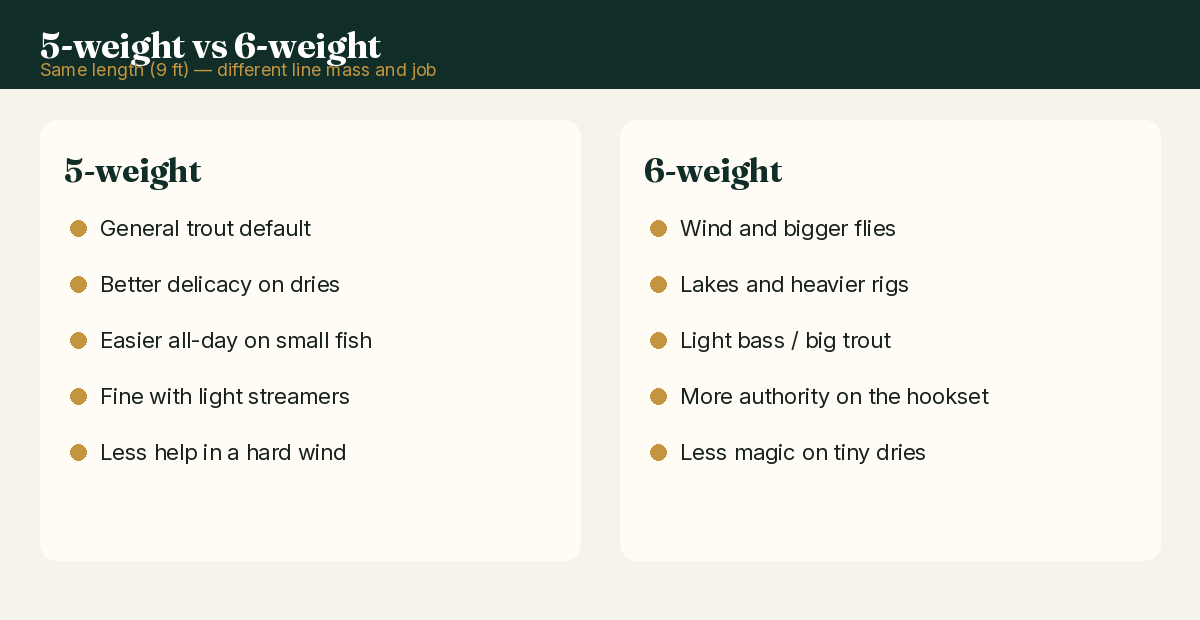
Pick the 5-weight if “trout, dries, nymphs and normal river fishing” describes most days.
Pick the 6-weight if “wind, hoppers, streamers, bass, lakes or heavier rigs” appears in your description repeatedly.
Should you just overline a 5-weight?
A heavier line can change how a particular rod loads at short range, but it does not turn the whole rod into a 6-weight. If your fishing consistently asks for the heavier line system, buy the 6-weight rather than trying to tune around the problem.