Quick answer
Choose a 9-foot rod for mixed fishing, easier handling and the broadest range of conventional casting. Choose a 10-foot rod when mending, high-sticking, indicator control or tight-line nymphing are major parts of your day.
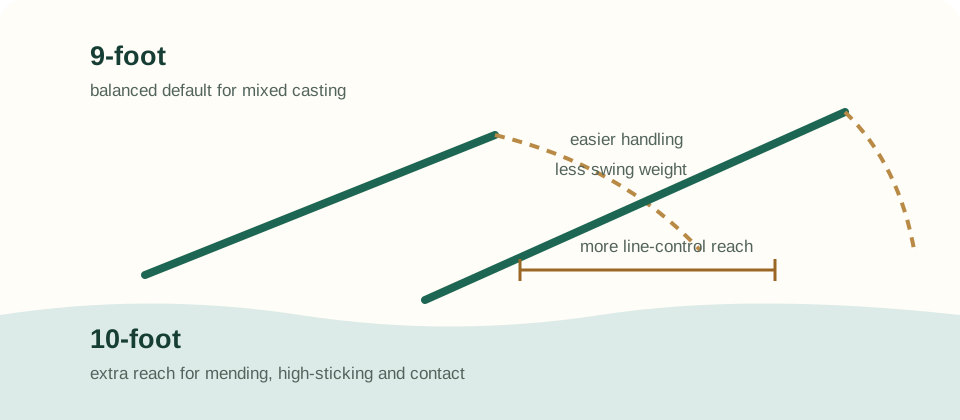
Side-by-side
| Situation | 9-foot | 10-foot |
|---|---|---|
| All-around trout | Best default | Useful if nymphing dominates |
| Dry-fly casting | Usually easier | Works, but extra length is not always useful |
| Indicator nymphing | Good | More reach and mending leverage |
| Euro nymphing | Short for dedicated use | Common starting length |
| Brush/tight banks | Easier | More cumbersome |
| Float tube / stillwater | Good | Extra reach may help line pickup |
| Swing weight | Usually lower | Usually more noticeable |
Choose 9 feet when versatility matters
A 9-foot rod remains the safest one-rod length because it casts conventionally, mends reasonably well and is easier to manage around trees, boats and banks. If you fish dries one day, an indicator the next and small streamers after that, nine feet rarely creates a serious limitation.
Choose 10 feet when reach solves a repeated problem
The extra foot matters most when the rod spends time controlling line rather than simply casting it. A longer rod can hold more line off conflicting currents, extend a tight-line drift and improve line pickup. If those jobs happen all day, the added swing weight is a fair trade.
Do not compare length in isolation
A 10-foot 3-weight Euro rod and a 9-foot 5-weight general-purpose trout rod are not simply two lengths of the same tool. Compare rods of similar intended use. Longer rods also amplify balance differences, so reel weight and overall swing weight become more noticeable.
Decision rule
What changes the answer?
| Condition | 9 ft advantage | 10 ft advantage |
|---|---|---|
| Mixed dries, nymphs and small streamers | Better all-round handling | Useful only if line control is a recurring priority |
| Brush, boats, tight banks | Less rod to manage | Can become cumbersome |
| Indicator nymphing and mending | Capable | More reach for lifting and repositioning line |
| Euro / contact nymphing | Usually a compromise | Often the more purpose-built choice |
| All-day fatigue | Usually easier to balance | More sensitive to swing weight and reel balance |
A current example of the extra-reach design idea is Winston's 10-foot AIR 2 REACH, which the manufacturer positions around technical presentations, nymphing and additional line control.
Bottom line
Nine feet is the versatile default. Ten feet earns its keep when mending, high-sticking or contact with the drift is something you do repeatedly—not because longer automatically means better.