Choose a trout rod by water and method
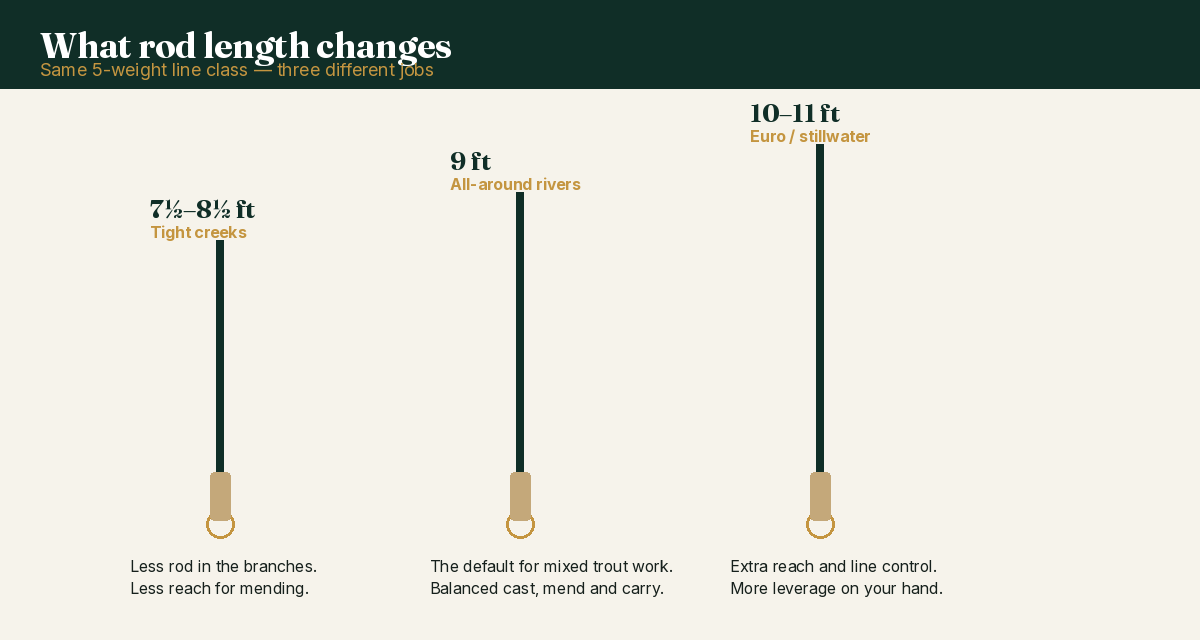
A trout rod should be selected around the water and the dominant technique, not around “trout” as a single category. A 9-foot 5-weight is the most versatile general-purpose baseline, while small-stream dry-fly anglers, dedicated Euro nymphers and streamer specialists can justify very different rods.
Define the target species, water type, common fly size, wind exposure and primary technique before looking at brand names. Those variables narrow the field far more reliably than awards or generic “best of” lists.
Current trout rods to compare by job
“Best trout rod” is too broad unless the water and method are defined. These current models illustrate the differences better than a single ranked list.
| Trout job | Current example | Why it fits |
|---|---|---|
| One rod for dries, nymphs and light streamers | ECHO Carbon XL 590-4 | ECHO calls its 9-foot 5-weight the most versatile freshwater trout rod in the Carbon XL family. |
| Versatile premium 5-weight | Sage R8 Core 590-4 | Sage positions this 9-foot 5-weight for trout flies of many sizes, varying line densities and broad line-control needs. |
| Fast, higher-end freshwater | Scott Centric | Current Centric models cover 4- through 7-weight freshwater configurations, with 8'6" to 10' lengths. |
| Mid/high-end all-around freshwater | Orvis Recon Freshwater | Useful when you want more lifting power and tracking than an entry rod without moving to Orvis's flagship Helios line. |
| Broad traditional-to-modern trout range | Hardy Aydon | Hardy's current single-hand Aydon range spans small-stream through stillwater-oriented lengths and weights. |
Specification shortlist
| Primary use | Starting weight | Typical length | Action direction |
|---|---|---|---|
| Small-stream dries | 3–4 wt | 7½–8½ ft | Moderate / medium-fast |
| General trout | 5 wt | 9 ft | Medium-fast |
| Technical dry fly | 4–5 wt | 9 ft | Moderate to medium-fast |
| Euro nymphing | 3–4 wt | 10–11 ft | Technique-specific |
| Streamer-heavy trout | 6 wt | 9 ft | Medium-fast to fast |
These are practical defaults. Specialized conditions can justify moving one weight, length or action category in either direction.
What price changes—and what it does not
Spend first on the right specification and a line that matches it. Premium trout rods may reduce swing weight, refine recovery or offer a particular feel, but those differences matter less than choosing the correct weight and length for your water.
Higher price can buy lighter components, more refined taper design, finish, country of manufacture or service support. None of those makes the rod universally better for a different use case.
How to compare two rods
Compare rods in this order: weight and intended line, length, action/loading behavior, actual fishing use, then secondary factors such as component finish, warranty and price. If possible, cast both with a line you would realistically fish.
A good comparison asks which rod makes your common cast easier, not which feels most powerful in a parking-lot distance test.
Buying mistakes
- Starting with a brand and forcing its lineup to fit the fishing.
- Buying a premium rod in the wrong specification because it is discounted.
- Ignoring fly line cost and quality when setting the budget.
- Treating fast action as a universal marker of quality.
- Choosing for an occasional extreme trip instead of the water fished most weeks.
Shortlist checklist
- Primary species and realistic fish size
- Most common fly or rig size
- Water size and casting distance
- Wind exposure
- Primary technique
- Preferred rod length
- Action that matches your timing
- Total budget including line and reel
- Warranty/service importance
FlyRod.com recommends specifications and decision frameworks rather than pretending one model is objectively best for every angler. Product lineups and prices change; confirm current specifications with the manufacturer before buying.
How to test a trout shortlist
Test trout rods with the leader length and fly size that dominate your fishing. Make short presentation casts, aerial mends, roll casts and line pickups in addition to normal overhead casts. If streamer fishing is important, test with the heavier line or fly system as well.
A rod that excels at one casting demonstration can still be inferior for everyday trout work. The shortlist should reflect the method you use most, then preserve enough versatility for secondary techniques.