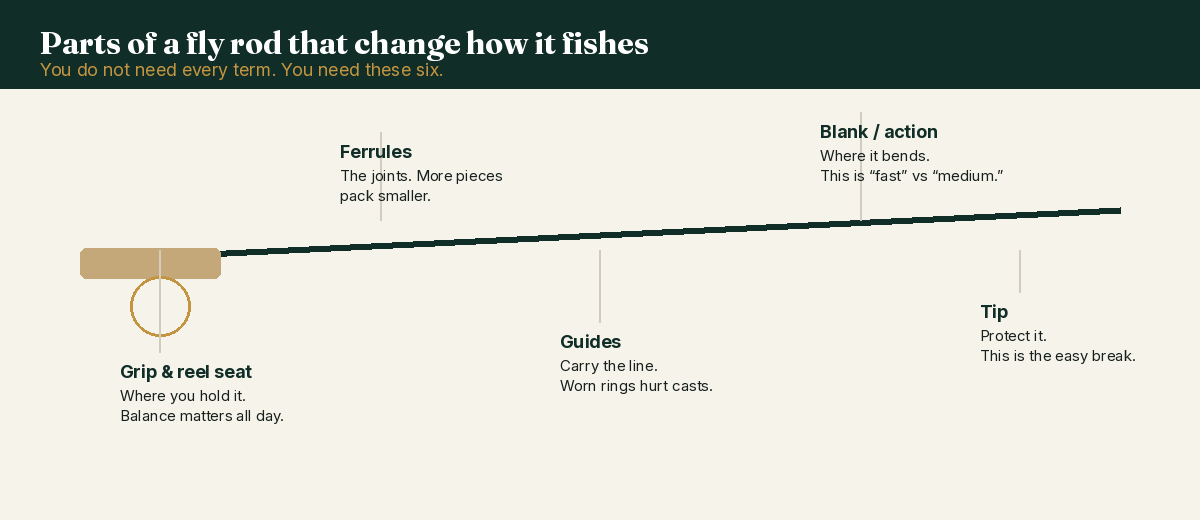
The best beginner rod makes learning easier
For a new angler, versatility and predictable loading matter more than premium materials or maximum line speed. A 9-foot 5-weight medium-fast rod remains the default for general freshwater trout because it covers common flies and techniques while giving a learner useful feedback. It is not the universal beginner answer: bass, saltwater and tiny streams require different tools.
Define the target species, water type, common fly size, wind exposure and primary technique before looking at brand names. Those variables narrow the field far more reliably than awards or generic “best of” lists.
Beginner rods worth comparing now
A beginner shortlist should favor rods that load clearly, cover common fishing and leave enough budget for a good line. These are current examples, not a ranking of every rod on the market.
| Rod | Good starting use | Why consider it | Watch for |
|---|---|---|---|
| ECHO LIFT | Budget-first freshwater | Current 5-weight and 6-weight models cover the most common beginner freshwater uses; the series is specifically positioned for accessible learning and long-term use. | The 7- and 8-weights make sense only if bass, salmon/steelhead or light saltwater is actually your target. |
| TFO NXT Black Label | First rod or outfit | TFO explicitly positions this moderate-action series for aspiring anglers and teaching programs. | Choose the model for your water; do not assume the cheapest size is the right one. |
| Orvis Clearwater | Step-up first rod | A current, broad lineup with a 9-foot 5-weight option and a long-running role as Orvis's accessible standalone rod series. | More money than the two options above; spend the difference only if the whole outfit still fits the budget. |
Simple rule: if you fish ordinary trout water, start comparisons around a 9-foot 5-weight. If your actual fishing is small creeks, bass, salmon or saltwater, change the specification before changing the brand.
Specification shortlist
| Primary use | Starting weight | Typical length | Action direction |
|---|---|---|---|
| General trout learner | 5 wt | 9 ft | Medium-fast |
| Small-stream trout | 4 wt | 8–8½ ft | Moderate to medium-fast |
| Bass-focused beginner | 7 wt | 9 ft | Medium-fast |
| Bonefish / flats beginner | 8 wt | 9 ft | Fast but loadable |
| Mixed warmwater | 6–7 wt | 9 ft | Medium-fast |
These are practical defaults. Specialized conditions can justify moving one weight, length or action category in either direction.
What price changes—and what it does not
Beginners often benefit more from a complete, balanced system than from spending the entire budget on the blank. Leave room for a suitable line, reel, leader material and practice. An inexpensive line that poorly matches the rod can make a good rod feel difficult.
Higher price can buy lighter components, more refined taper design, finish, country of manufacture or service support. None of those makes the rod universally better for a different use case.
How to compare two rods
Compare rods in this order: weight and intended line, length, action/loading behavior, actual fishing use, then secondary factors such as component finish, warranty and price. If possible, cast both with a line you would realistically fish.
A good comparison asks which rod makes your common cast easier, not which feels most powerful in a parking-lot distance test.
Buying mistakes
- Starting with a brand and forcing its lineup to fit the fishing.
- Buying a premium rod in the wrong specification because it is discounted.
- Ignoring fly line cost and quality when setting the budget.
- Treating fast action as a universal marker of quality.
- Choosing for an occasional extreme trip instead of the water fished most weeks.
Shortlist checklist
- Primary species and realistic fish size
- Most common fly or rig size
- Water size and casting distance
- Wind exposure
- Primary technique
- Preferred rod length
- Action that matches your timing
- Total budget including line and reel
- Warranty/service importance
FlyRod.com recommends specifications and decision frameworks rather than pretending one model is objectively best for every angler. Product lineups and prices change; confirm current specifications with the manufacturer before buying.
What a beginner should test
A beginner should look for a rod that provides obvious feedback when it loads. During a demo, make short casts first. If the rod feels dead until a long amount of line is outside the tip, it may be harder to learn on even if an experienced caster can make it perform.
A medium-fast 5-weight is popular for learning because it usually gives enough feedback without limiting future use. But the learner should still choose the correct weight for the species and flies they will actually fish.