Recommended starting setup
| Rod weight | 3-weight |
|---|---|
| Length | 7½–8½-foot |
| Action | medium |
This is a sensible starting range, not a rigid prescription. Local water, average fish size, fly size and wind should refine the choice.
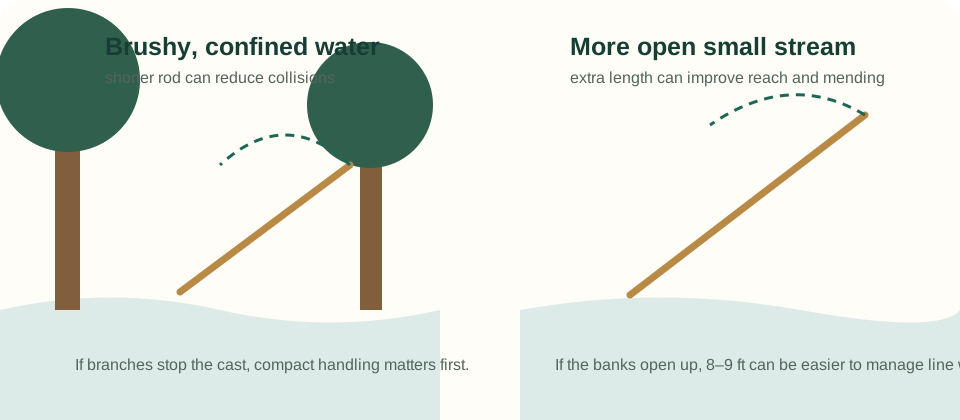
Match the rod to the water
Confined streams reward shorter rods and close-range control. Open rivers, lakes and flats often reward line speed, reach and the ability to manage wind. Begin with the water you will fish most often.
Match the rod to the flies
Large, wind-resistant or weighted flies often require more line mass and a stronger rod. Small dries and light nymphs place a premium on touch and presentation.
Fish control and ethics
The rod should provide enough authority to land fish efficiently in the expected current and structure. Deliberately under-gunning tackle can lengthen fights unnecessarily.
Buying checklist
- Where will you fish most often?
- What fly sizes will you cast?
- How much wind is typical?
- What is the realistic fish-size range?
- Will this be your only rod or a specialized addition?
A more useful length rule than “small stream = short rod”
| Water / cover | Practical length range | Why |
|---|---|---|
| Very brushy, short casts, frequent bow-and-arrow casts | About 6½–7½ ft | Maneuverability and branch clearance dominate. |
| Typical wooded creek with some open pockets | About 7½–8½ ft | Useful compromise between handling and line control. |
| Open small river / meadow stream | About 8–9 ft | Extra reach can improve mending and drift control without much penalty. |
What should change the setup?
- Move shorter when branches and bank cover repeatedly stop your casting stroke.
- Move longer when the water is open enough that mending and drift control matter more than clearance.
- Move heavier when larger terrestrials, weighted nymphs, wind or stronger current are normal rather than occasional.
- Move lighter when small dries, short casts and modest trout define almost every day.
Bottom line
Choose the shortest rod that solves a real clearance problem—not the shortest rod available. On tight water, handling comes first; once the banks open up, reach becomes useful again.