Quick comparison
| Material | Typical strengths | Typical trade-offs | Good fit |
|---|---|---|---|
| Graphite / carbon | Low weight, quick recovery, broad design range | Feel varies widely; thin high-performance blanks still need care | Most modern freshwater and saltwater fishing |
| Fiberglass | Deep loading, smooth feel, durable, fun at close range | Heavier for a given length; slower recovery in many designs | Small streams, light lines, anglers who enjoy a relaxed tempo |
| Bamboo | Distinctive deep flex, craftsmanship, traditional feel | Weight, price, maintenance and travel practicality | Dry-fly/traditional fishing where feel matters more than efficiency |
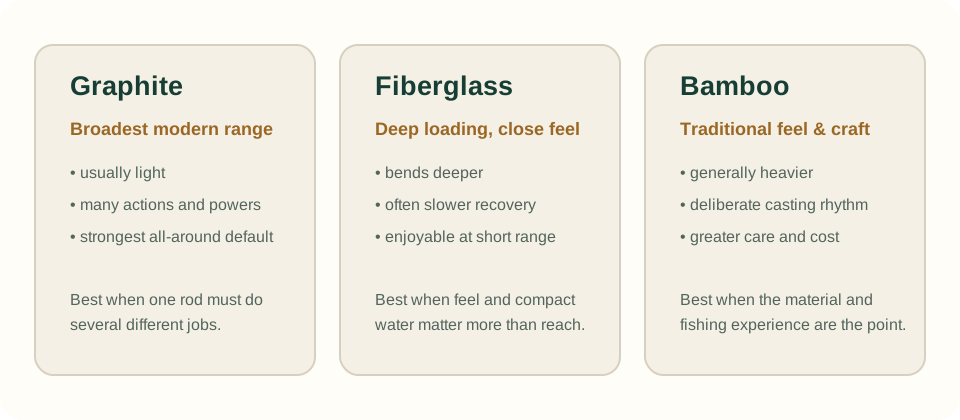
Graphite is the broad modern default
Most current fly rods use carbon-fiber composites because designers can build light blanks across a wide range of actions and powers. “Graphite” does not mean “fast.” Manufacturers can make moderate dry-fly rods, long nymphing rods and powerful saltwater rods from carbon by changing taper, layup and resin system.
Fiberglass is more than a nostalgia choice
Modern glass rods can be crisp, but many still bend deeper and recover more slowly than comparable graphite rods. That can make short casts pleasant and small fish engaging. The trade-off becomes more obvious as rods get longer or the fishing demands repeated distance, wind reserve or aggressive line control.
Bamboo is a fishing choice and a craftsmanship choice
Bamboo rods are built from split cane rather than a rolled composite blank. They tend to carry more physical weight and often have a deliberate casting rhythm. For some anglers that feel is the reason to own one. For a traveller, beginner or angler who needs one versatile rod, the cost and care requirements can make graphite more practical.
Choose the fishing experience, then the material
- Want one versatile rod with the widest choice of lengths and powers? Start with graphite.
- Fish small water and value deep loading and close-range feel? Try fiberglass.
- Want traditional feel and craftsmanship and accept higher cost/maintenance? Consider bamboo.
What changes the answer?
| Your priority | Start with | Reason |
|---|---|---|
| One rod for varied fishing | Graphite | Largest choice of weights, lengths, actions and prices. |
| Small streams and close-range feel | Fiberglass | Deeper loading can make short casts and light fish engaging. |
| Wind, long rods, heavier line weights | Graphite | Lower blank weight and broad design range become more useful as the outfit grows. |
| Traditional casting rhythm and craftsmanship | Bamboo | The material itself is part of the ownership and fishing experience. |
The ownership difference matters too
Material choice is not only about casting. Bamboo asks for more care around storage and moisture; fiberglass can be durable but is not indestructible; graphite is light and strong in normal use but can still be damaged by impact, high-sticking or a nick in the blank.
For examples of how one current maker spans modern composites and traditional cane, see the Thomas & Thomas rod collection, which includes carbon-fiber families and handcrafted bamboo models.
Bottom line
Choose graphite when you want the broadest practical tool. Choose fiberglass when deeper loading and close-range feel are part of the fun. Choose bamboo when the traditional material and casting experience are worth the extra cost and care to you.